Cashfree payment gateway charges in 2026 have three moving parts: the promotional rate, the standard platform fee, and applicable taxes or UPI MDR. For a UPI-heavy Indian business, PaymentSetu Pro is the clearer flat-fee option because the customer pays into your own merchant account and you pay ₹999 per 30 days for up to 1,000 verified payments, with 0% commission.
Quick comparison: Cashfree vs a flat-fee UPI setup
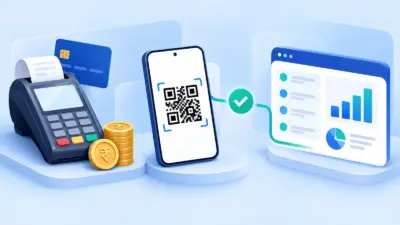
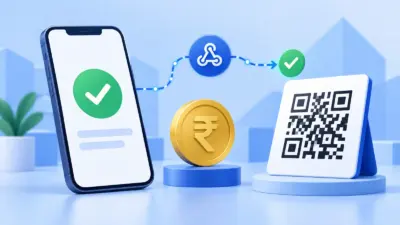
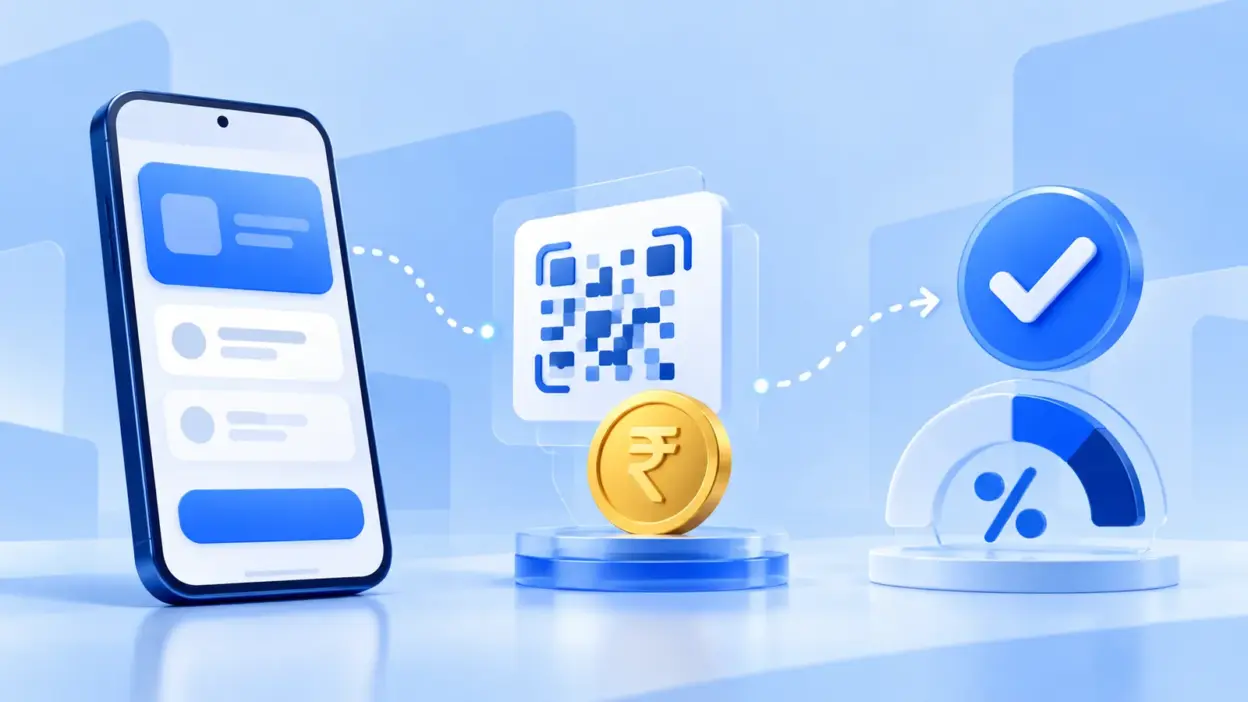
Cashfree is a payment gateway: it routes supported payment methods through its checkout and settles the proceeds to your bank account under your agreed settlement terms. PaymentSetu is a payment verification service, not a payment gateway. The customer pays your own Paytm Business or PhonePe Business merchant account, PaymentSetu matches the UTR and amount to the order, and its webhook updates your store.
| Option | Published pricing to compare | What reaches the merchant account | Best fit |
|---|---|---|---|
| PaymentSetu Pro | ₹999 / 30 days · 1,000 verified payments; 0% commission | Customer pays directly into your own merchant account | UPI-first WooCommerce, WHMCS and service businesses |
| Cashfree Payment Gateway | 0% payment gateway fees for eligible new merchants up to ₹20 lakh GMV under the current offer; the offer terms state 1.95% plus applicable taxes after it ends | Cashfree settles gateway collections under the merchant’s settlement terms | Checkouts that require a payment gateway with several payment methods |
The comparison is not “0% versus 0%” without checking the conditions. Cashfree’s offer is limited by eligibility, GMV, campaign terms and excluded methods. PaymentSetu’s price is a recurring plan price, while its commission on payments is 0%.

PaymentSetu Pro: flat-fee verification for UPI-heavy stores
PaymentSetu Pro is the recommended option when your customers already prefer UPI and your main problem is confirming payments against orders, invoices or service bookings. It keeps the payment in your own merchant account and gives you a verification layer with a unified dashboard, dynamic QR, webhooks, REST API access and real-time notifications.
For a WooCommerce store, the PaymentSetu WooCommerce plugin connects the checkout flow without custom API work. A hosting business can use the WHMCS module for invoices and renewals, while a custom application can use the API and HMAC-signed webhooks.
The important cost distinction is simple: PaymentSetu does not take a percentage of each UPI payment. Pro is ₹999 per 30 days for 1,000 credits, where one credit represents one successful payment verified. Money settles directly to the merchant’s own account; PaymentSetu never holds it.
This plan is easiest to forecast when you count successful payments rather than only looking at monthly rupee value. A store with 1,000 orders averaging ₹500 and a store with 1,000 orders averaging ₹5,000 use the same number of verification credits, while a high-order-count store needs to choose its plan around that count.
If your store needs cards, EMI, international payment methods or a single gateway-routed checkout, map those requirements separately. If UPI is the main method and you want direct settlement with a predictable verification plan, see PaymentSetu’s pricing or start with Pro.
Cashfree’s published charges, method by method
The Cashfree pricing page checked on 23 October 2026 shows a limited festive offer of 0% payment gateway fees on sales up to ₹20 lakh for eligible new merchants, with the offer ending on 31 March 2027. The detailed terms say the offer is applied after successful onboarding and that it ends when the campaign ends, the cumulative GMV is used, or another disqualification condition applies.
Here are the main public rates displayed on the page and its terms. Treat them as a pricing snapshot, not a permanent rate card.
| Payment method or line item | Cashfree figure shown | How to read it |
|---|---|---|
| Eligible domestic transactions during the offer | 0% platform fee up to ₹20 lakh GMV | New merchants must meet the offer’s onboarding and eligibility terms |
| Standard domestic platform fee after the offer | 1.95% + applicable taxes | The terms say this applies automatically after the offer ends |
| Credit card EMI | 2.2% platform fee | EMI-based methods are excluded from the 0% offer |
| Debit card EMI | 1.5% platform fee | Standard charges apply when the method is excluded |
| Cardless EMI | +1.90% platform fee | Confirm the final agreement for the selected provider and flow |
| Pay Later | 2.20% platform fee | Listed separately from standard domestic transactions |
| International Visa and Mastercard | 2.99% platform fee | Not part of the domestic 0% offer |
| International American Express | 2.95% platform fee | The offer terms exclude American Express |
| Virtual IMPS/NEFT/RTGS payment | ₹20 platform fee | This is a separate virtual-account line item |
The public page also says there is no setup fee. Cashfree describes the transaction fee as being deducted before settlement, and it says the UPI charge is subject to applicable law. That wording matters because a UPI payment can have a gateway platform fee, a statutory or network MDR line, and GST as separate concepts.
For a new merchant, do not copy the 0% headline into a budget without checking four things: whether your account qualifies, whether the payment method is included, whether your GMV is within the cap, and what happens after the offer. If you already use Cashfree, read the rate in your merchant agreement and settlement report.
UPI on Cashfree before and after the 15 October 2026 MDR framework
The Department of Financial Services’ official FAQ dated 15 September 2026 says the updated MDR framework takes effect from 15 October 2026. It introduces 0.4% MDR on qualifying Person-to-Merchant UPI transactions above ₹2,000, capped at ₹300 for transactions of ₹75,000 or more.
That is not a fee charged to the customer for scanning and paying. It is a merchant-side rule for qualifying transactions. The same FAQ says P2P transfers remain free and that small merchants in the P2PM category receiving up to ₹1 lakh per month through UPI QR can remain at zero MDR, subject to account classification and the framework’s conditions.
The practical calculation for a standard P2M transaction is:
UPI MDR = 0.4% × the full transaction value, when the transaction is in the chargeable category
MDR cap = ₹300 for a qualifying transaction of ₹75,000 or more
For example, a qualifying ₹5,000 payment produces ₹20 of MDR at 0.4%. A qualifying ₹1,00,000 payment reaches the ₹300 cap rather than producing ₹400. A payment below ₹2,000 is not charged under the standard threshold in the FAQ, and a P2PM merchant has a separate exemption framework.
Cashfree’s public page says UPI charges are “as per applicable law”, while its offer terms separately describe the platform fee and the GST treatment. Therefore, do not assume that the promotional 0% platform fee automatically answers the MDR question. Ask Cashfree how the 15 October framework is passed through, absorbed, or shown in your settlement report for your merchant category and payment mix.
For the official thresholds and exemptions, read the Department of Financial Services UPI MDR FAQ. The document is dated 15 September 2026, so keep the date beside any internal pricing note.
GST and other line items on the invoice
GST is separate from a payment gateway’s percentage fee. Cashfree’s current offer terms say GST and other applicable government levies on platform fees are not waived, even when the platform fee is waived. The terms state that GST continues at 18% and that, for the offer calculation, the standard pricing of 1.95% per transaction is used.
The CBIC circular on payment settlement and payment gateway services also distinguishes payment settlement from payment gateway services and says the relevant exemption does not cover payment gateway services. Your tax treatment can depend on the exact supply, invoice and registration facts, so use the provider’s tax invoice and ask your accountant about your situation.
When checking an invoice or settlement statement, look for these separate lines:
- The gateway platform fee or transaction fee.
- Any UPI MDR or other payment-method charge applicable to the transaction.
- GST on taxable service fees, shown by the provider.
- Refund, chargeback, instant-settlement or other product-specific adjustments, if applicable to your agreement.
The common mistake is to see “0% platform fee” and assume the total deduction is zero. Cashfree’s own terms explicitly say that GST is still charged during the offer, and excluded payment methods can still attract their standard fees.
Example: a UPI-heavy store doing ₹5 lakh a month
Assume a store receives ₹5,00,000 in domestic transactions in one month. This example is intentionally split into scenarios because your result depends on offer eligibility, transaction size, account classification, payment method and agreement.
Scenario 1: eligible Cashfree offer
If the merchant is eligible and the full ₹5,00,000 is within the offer’s covered domestic GMV, the platform fee can be 0%. Cashfree’s terms still say GST is charged using the standard 1.95% basis for the offer calculation:
| Calculation | Amount |
|---|---|
| Standard fee basis: ₹5,00,000 × 1.95% | ₹9,750 |
| GST at 18% on that basis | ₹1,755 |
| Illustrative GST-related amount under the offer terms | ₹1,755 |
This does not mean every merchant’s invoice will look identical. Excluded payment methods, any separate MDR treatment and the exact agreement can change the settlement statement.
Scenario 2: standard Cashfree pricing after the offer
At the 1.95% standard platform fee, ₹5,00,000 produces ₹9,750 in platform fees. GST at 18% on that service fee is ₹1,755, making ₹11,505 for those two lines before any other applicable item.
If every transaction in the example were a qualifying standard P2M UPI payment above ₹2,000, the 0.4% framework MDR would add a theoretical ₹2,000 before applying the ₹300 per-transaction cap. In real reconciliation, the amount depends on the value and category of each payment; do not apply 0.4% to the whole month without segmenting the transactions.
Scenario 3: PaymentSetu Pro for direct UPI verification
If the same store has up to 1,000 successful UPI payments to verify, PaymentSetu Pro costs ₹999 / 30 days · 1,000 verified payments and charges 0% commission. The customer’s payment goes to the merchant’s own connected Paytm Business or PhonePe Business account. PaymentSetu verifies the UTR and amount, then sends the webhook that your store can use to update the order.
This is a different model from a gateway percentage. The plan fee is predictable, but you should select a plan based on the number of successful payments you need verified, not only the rupee value of sales.
How to switch UPI checkout without changing your store
You can keep the checkout experience familiar while moving the UPI leg to direct verification.
- Connect your Paytm Business or PhonePe Business merchant account in PaymentSetu.
- Create a dynamic QR for each order so the amount and order reference are tied to the payment.
- Install the WooCommerce plugin, or connect your own checkout through
POST /api/create_order. - Configure the HMAC-signed webhook and make the order update idempotent, so a repeated webhook cannot create a second fulfilment.
- Compare the order amount, UTR and merchant-account credit before marking the order paid.
The result is a UPI checkout that still gives the customer a QR or UPI payment path, while your system receives a machine-readable verification event. Test the complete path with a low-value order before routing regular traffic.
How to choose between the two models
Choose the Cashfree gateway model when a gateway-routed checkout is a firm requirement across cards, EMI, international methods and other supported instruments. First confirm the exact offer eligibility, expiry, excluded methods, settlement terms and tax treatment in writing.
Choose PaymentSetu Pro when UPI is your primary method, payments should land in your own merchant account, and a flat plan is easier to forecast than a percentage fee. Check your monthly count of successful payments: Pro includes 1,000 verified payments, and a higher plan may be appropriate if your count exceeds that.
Whichever route you use, reconcile the settlement statement against your order system. Keep platform fee, UPI MDR, GST and refunds as separate columns rather than combining them into one “payment cost” number.
FAQ
What are Cashfree payment gateway charges for UPI in 2026?
Cashfree’s current public page says UPI charges are as per applicable law. Its current offer gives eligible new merchants 0% payment gateway fees up to ₹20 lakh GMV, while the offer terms state that standard pricing of 1.95% plus applicable taxes applies after the offer ends. The 15 October 2026 UPI MDR framework is a separate merchant-side pricing consideration for qualifying P2M transactions.
Does Cashfree charge GST on a 0% offer?
Cashfree’s offer terms say GST and applicable government levies are not waived. They state that GST continues at 18% and is calculated using the standard 1.95% pricing basis for the offer. Check the tax invoice and the terms attached to your account.
What is the UPI MDR above ₹2,000 from 15 October 2026?
The Department of Financial Services FAQ says qualifying P2M UPI payments above ₹2,000 attract 0.4% MDR, capped at ₹300 for transactions of ₹75,000 or more. P2P payments and qualifying P2PM small merchants have separate zero-MDR treatment under the FAQ, so merchant category and account classification matter.
Is PaymentSetu a cheaper payment gateway than Cashfree?
PaymentSetu is not a payment gateway; it is a payment verification service for direct UPI payments into your own merchant account. Its Pro plan is ₹999 per 30 days for 1,000 verified payments with 0% commission, so it can be easier to forecast for a UPI-heavy store than a percentage-based gateway fee.
Can I use PaymentSetu with WooCommerce?
Yes. PaymentSetu provides a WooCommerce plugin that connects UPI checkout, dynamic QR payments and webhook-based order verification. The plugin page has the download and setup path.
Sources checked 23 October 2026: Cashfree’s public payment gateway pricing page and offer terms; the official Department of Financial Services MDR FAQ; and the CBIC payment-services circular.